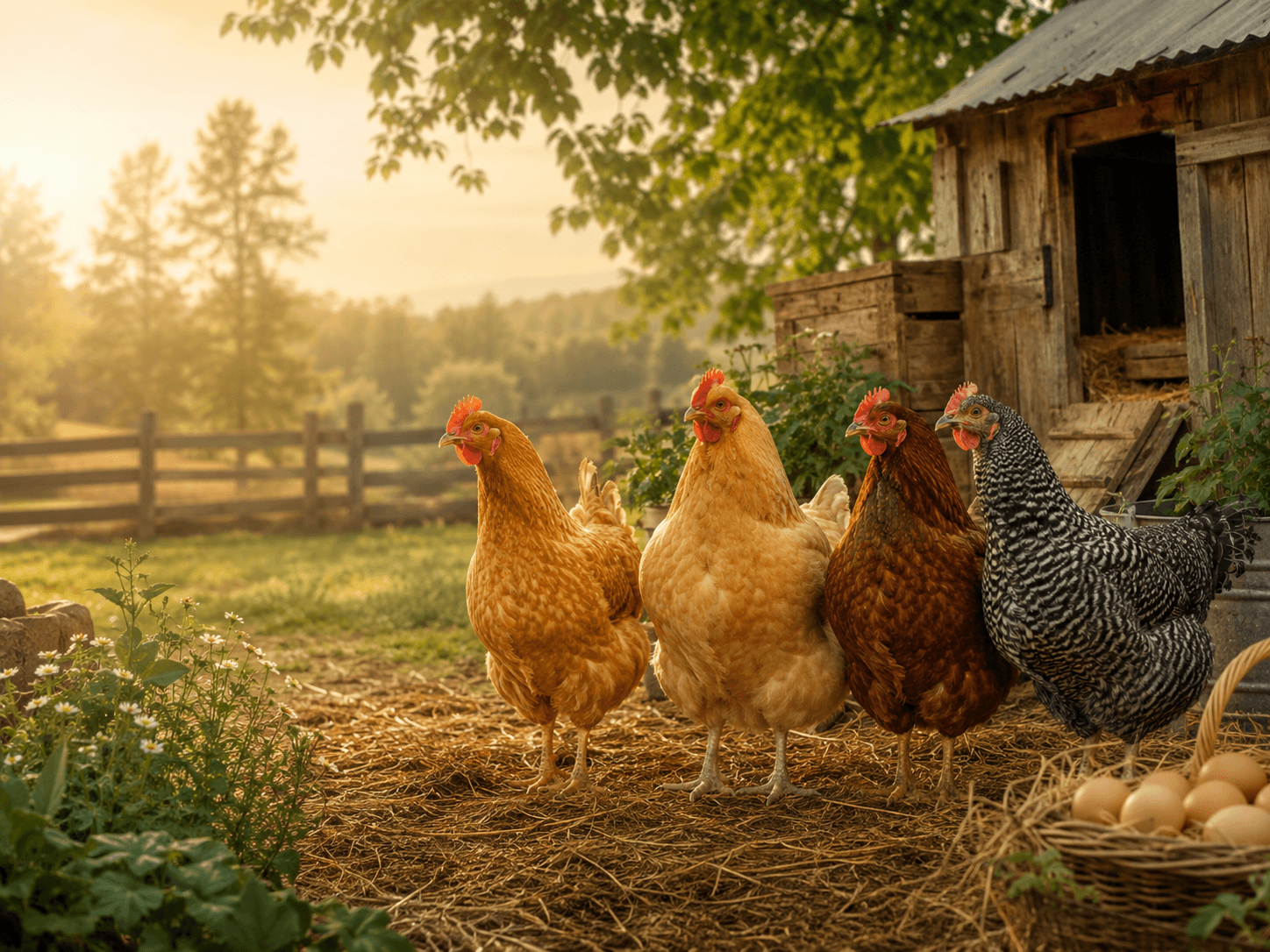
The best egg laying chickens for beginners are the Golden Comet, Rhode Island Red, Buff Orpington, Plymouth Rock, Black Sex-Link, Australorp, and ISA Brown. Each one lays 200–350 eggs per year, handles beginner mistakes gracefully, and has a calm enough temperament for new keepers to manage confidently.
Not every great layer makes a great beginner bird. High-strung breeds like White Leghorn will stress you out. Bantams are adorable but lay tiny eggs. Heritage breeds take longer to start laying. This guide filters out the noise and focuses on the seven breeds that are genuinely forgiving, friendly, and productive from day one.
If you want just one recommendation — get the Golden Comet. It is the single most beginner-friendly laying hen available: 250–300 large brown eggs per year, a calm lap-chicken temperament, and one of the easiest breeds for first-time keepers to manage successfully. The rest of this guide explains why — and covers six more excellent beginner breeds depending on your climate, flock goals, and egg production needs.
Best Beginner Egg Laying Chickens
Compare the best beginner-friendly chicken breeds by egg production, temperament, hardiness, and ease of care.
Golden Comet
Rhode Island Red
Buff Orpington
Plymouth Rock
Black Sex-Link
Australorp
ISA Brown
The 7 Best Egg Laying Chickens for Beginners (Full Reviews)
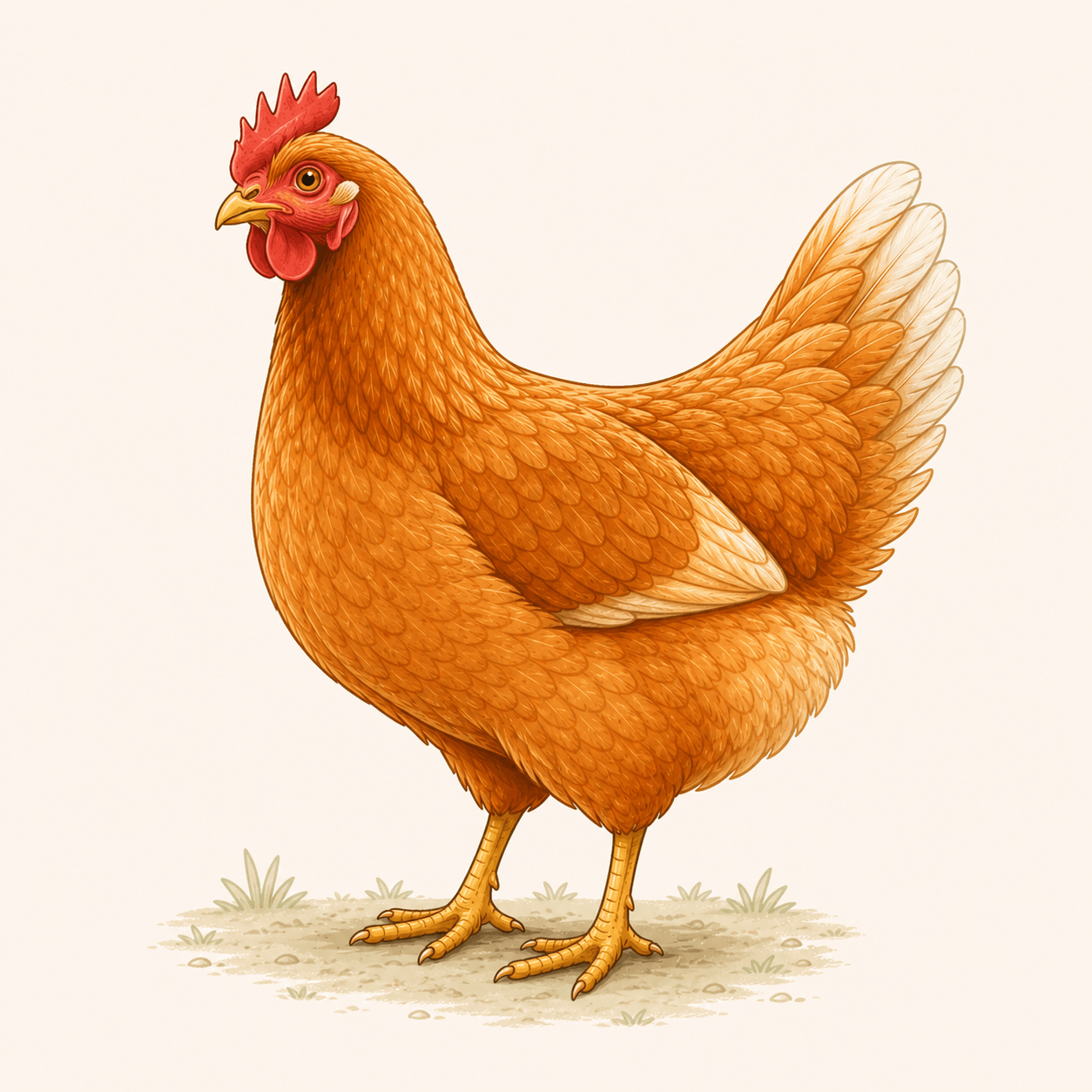
1 Golden Comet — Best Overall Beginner Layer
Brown
Large
Extremely friendly & calm
Good
16–18 weeks
First-time chicken keepers
The Golden Comet is the most consistently recommended beginner breed for a simple reason: it combines near-maximum egg production with a temperament that makes every other aspect of chicken keeping easier. These hens follow you around the yard, sit on your lap, and tolerate handling from young children without so much as a protest.
They start laying earlier than most breeds — often as young as 16 weeks — and produce steadily with less drop-off in winter than many heritage breeds. As a sex-link hybrid, you can also identify females at hatch by feather color, which means no accidental roosters in your order.
✔ Why it’s great for beginners: Friendly enough to make kids fall in love with chicken keeping, productive enough to keep you motivated, and hardy enough to forgive the small mistakes every new keeper makes.
✘ One thing to know: Like most hybrids, peak production lasts 2–3 years before dropping off. Plan to add new hens every couple of years to maintain your egg supply.
Golden Comets are a sex-link cross — you order “Golden Comet pullets” and every bird in the box will be a hen. No surprise roosters, no guessing. This is a huge advantage when ordering your first flock.
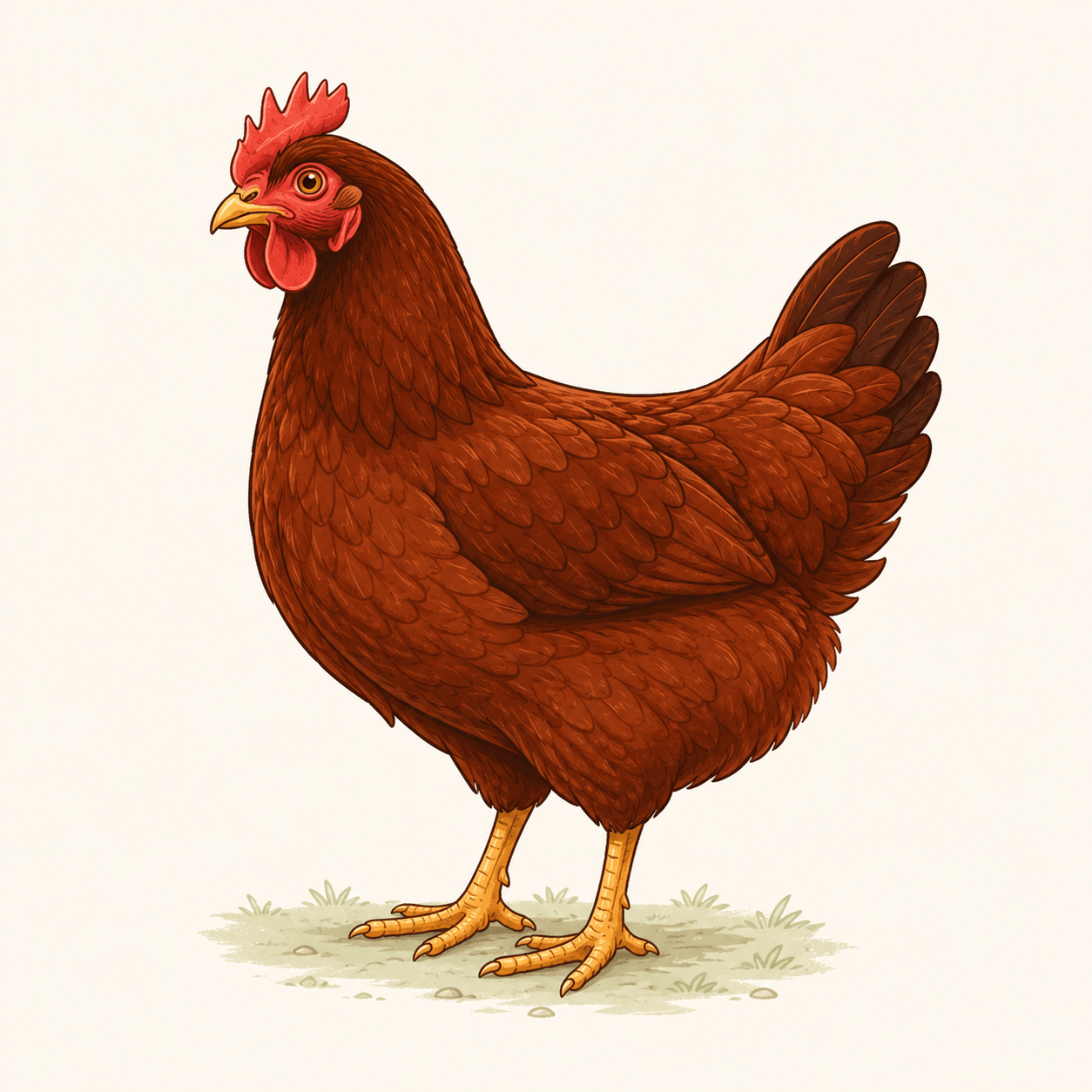
2 Rhode Island Red — Most Beginner-Proof Breed
Brown
Large
Confident & curious
Excellent
18–20 weeks
Cold climates & durability
If the Golden Comet is the friendliest beginner breed, the Rhode Island Red is the toughest. Developed in New England in the 1800s specifically to survive harsh winters and inconsistent management, it is the breed that forgives the most mistakes. Forget to top up the water one afternoon in summer? Your RIRs will be annoyed but fine. Cold snap hits unexpectedly? They barely notice.
The Rhode Island Red’s longer productive lifespan — 4–5 solid laying years — also makes it the better long-term investment for beginners who plan to keep chickens for years rather than seasons.
✔ Why it’s great for beginners: Survives management errors that would set back more delicate breeds. Year-round layer even in cold climates without supplemental lighting.
✘ One thing to know: Hens can be assertive in the pecking order, and roosters are genuinely aggressive. Stick to hens only for a beginner flock, and don’t mix them with very gentle breeds like Silkies.
Rhode Island Reds are one of the few breeds that lay reliably through their first winter without a coop light — a big advantage for beginners who haven’t yet set up supplemental lighting.
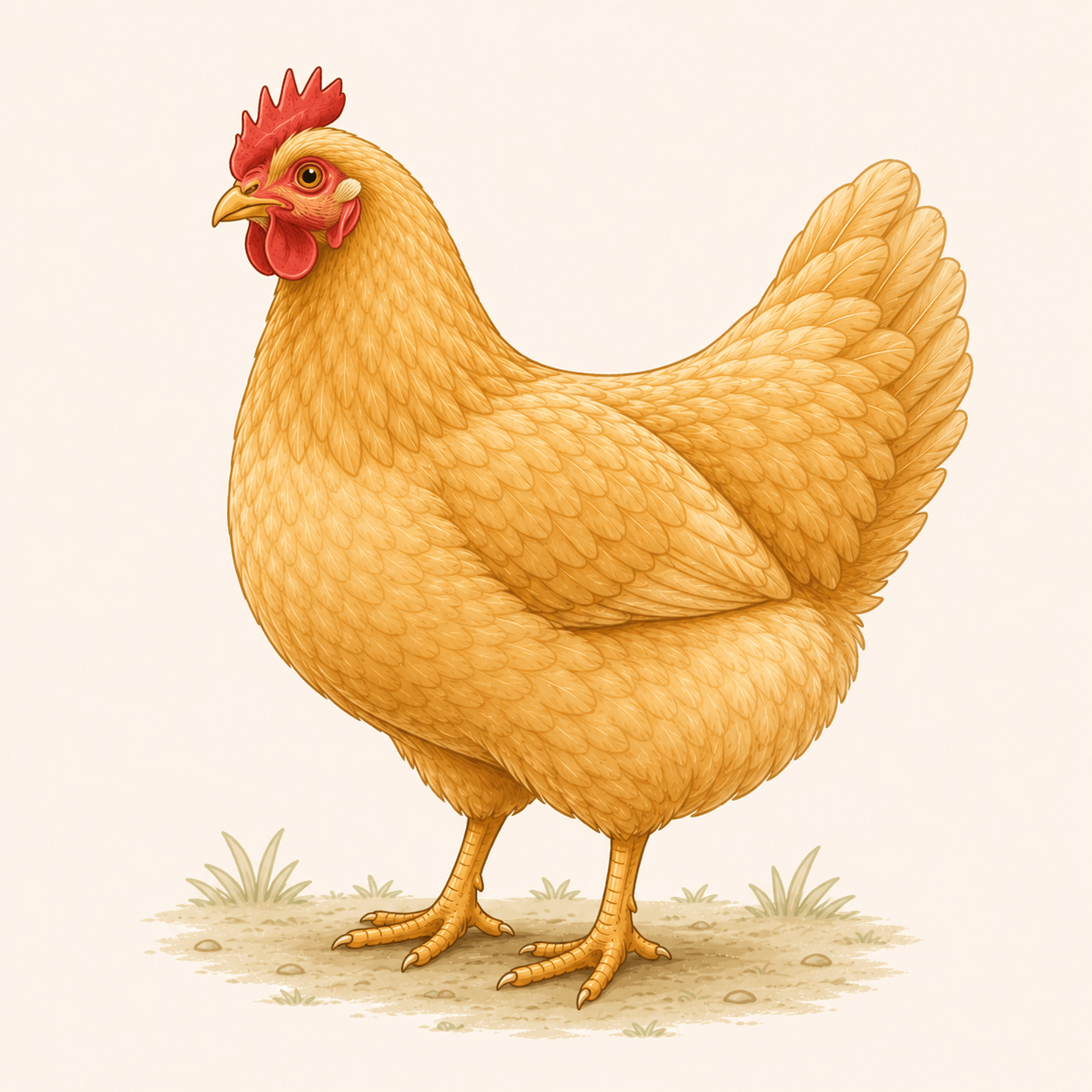
3 Buff Orpington — Best for Families & Children
Brown
Large
Very docile & affectionate
Excellent
20–24 weeks
Families & young children
Often called the “golden retriever of chickens,” the Buff Orpington is the breed most likely to end up sitting in a child’s lap. These large, fluffy, golden birds are genuinely affectionate — they seek out human contact rather than just tolerating it — and their docile nature means even young children can handle them safely with minimal supervision.
They’re not the highest producers on this list, and their broodiness means egg production can pause for weeks at a time. But for a family flock where the experience matters as much as the egg count, no breed comes close.
✔ Why it’s great for beginners: Near-zero aggression, patient with handling, beautiful birds that make kids excited about farm life. Cold hardiness is exceptional.
✘ One thing to know: Buff Orpingtons go broody frequently — meaning they’ll stop laying and sit on a nest trying to hatch eggs (even unfertilized ones) for 3–8 weeks at a time. You’ll need to “break” the broody behavior or accept gaps in egg production.
To break a broody hen, place her in a wire-bottomed cage with food and water but no nesting material for 3–5 days. The airflow under her belly lowers her body temperature and breaks the hormonal cycle. It sounds harsh but is harmless and very effective.
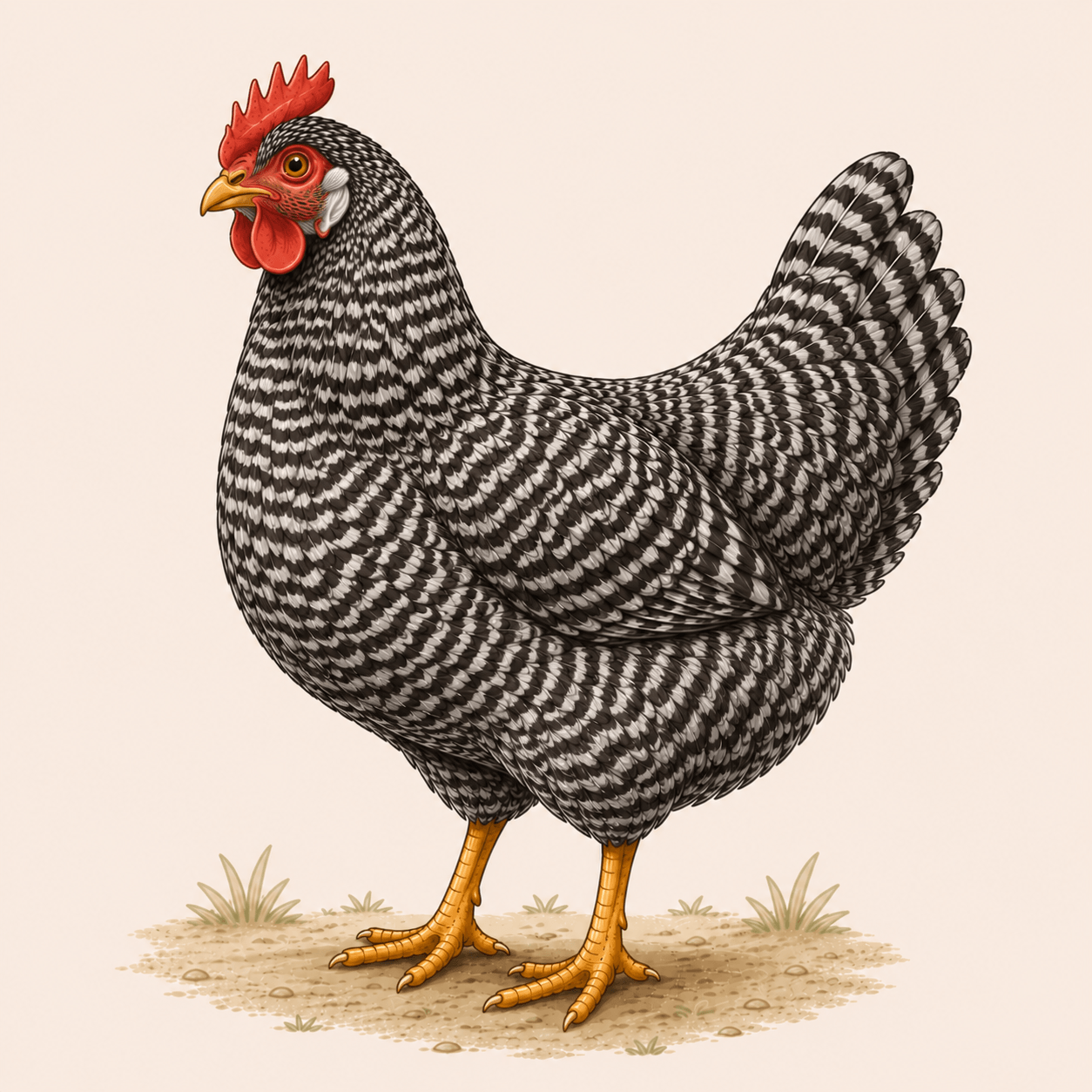
4 Plymouth Rock (Barred Rock) — Best Low-Maintenance Beginner Breed
Brown
Large
Friendly & calm
Excellent
18–20 weeks
Cold climates & low-maintenance flocks
The Barred Rock (the most common Plymouth Rock variety) is the breed that experienced keepers in cold climates swear by — and for good reason. Their rose comb resists frostbite, their heavy feathering insulates against cold, and they maintain solid egg production through temperatures that shut down most other breeds. For a beginner in Michigan, Wisconsin, Minnesota, or New England, this may be the single best choice.
They’re also genuinely low-maintenance. Unlike Golden Comets or Buff Orpingtons that actively seek attention, Barred Rocks are content to do their own thing — forage, lay their egg, go to roost. They don’t need much from you beyond basic care.
✔ Why it’s great for beginners: Handles cold and neglect better than almost any breed. Very consistent layer. Beautiful black-and-white barred feathering is easy to identify in the flock.
✘ One thing to know: Lower peak production than hybrids, and can go broody occasionally. Not as affectionate as Golden Comet or Buff Orpington if you want lap chickens.
If you’re in a state where winter temperatures regularly drop below 0°F, Plymouth Rock is your most reliable layer. Their rose comb means almost zero risk of the frostbite that can affect large-comb breeds like Leghorns.
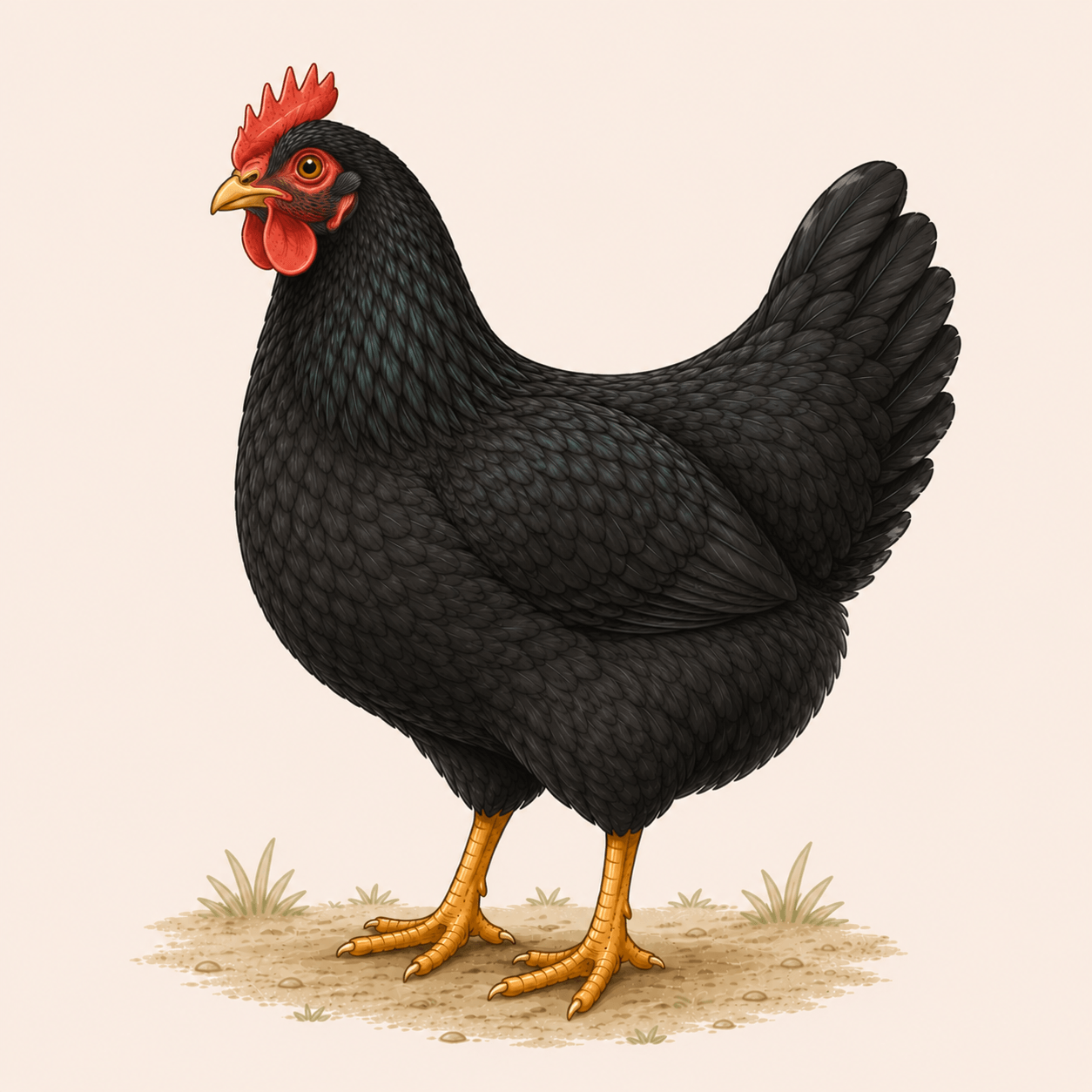
5 Black Sex-Link — Best Underrated Beginner Breed
Brown
Large
Calm & adaptable
Good
16–18 weeks
Easy high-production flocks
The Black Sex-Link is the least famous breed on this list, and also one of the most underrated. A Rhode Island Red / Barred Rock cross, it inherits the RIR’s strong production and the Barred Rock’s calm disposition — giving you a bird that lays as many eggs as a Golden Comet but is noticeably hardier in cold weather.
Like Golden Comets, Black Sex-Links can be sexed at hatch by feather color, eliminating the accidental rooster problem. They’re also less prone to broodiness than heritage breeds, meaning more consistent laying throughout the year.
✔ Why it’s great for beginners: Near-hybrid production levels with above-average cold hardiness. Calm temperament inherited from Barred Rock parent. Easy to sex at hatch.
✘ One thing to know: Harder to find at local farm stores than Golden Comets or Rhode Island Reds — you may need to order from a hatchery. Peak laying lifespan is 2–3 years like other hybrids.
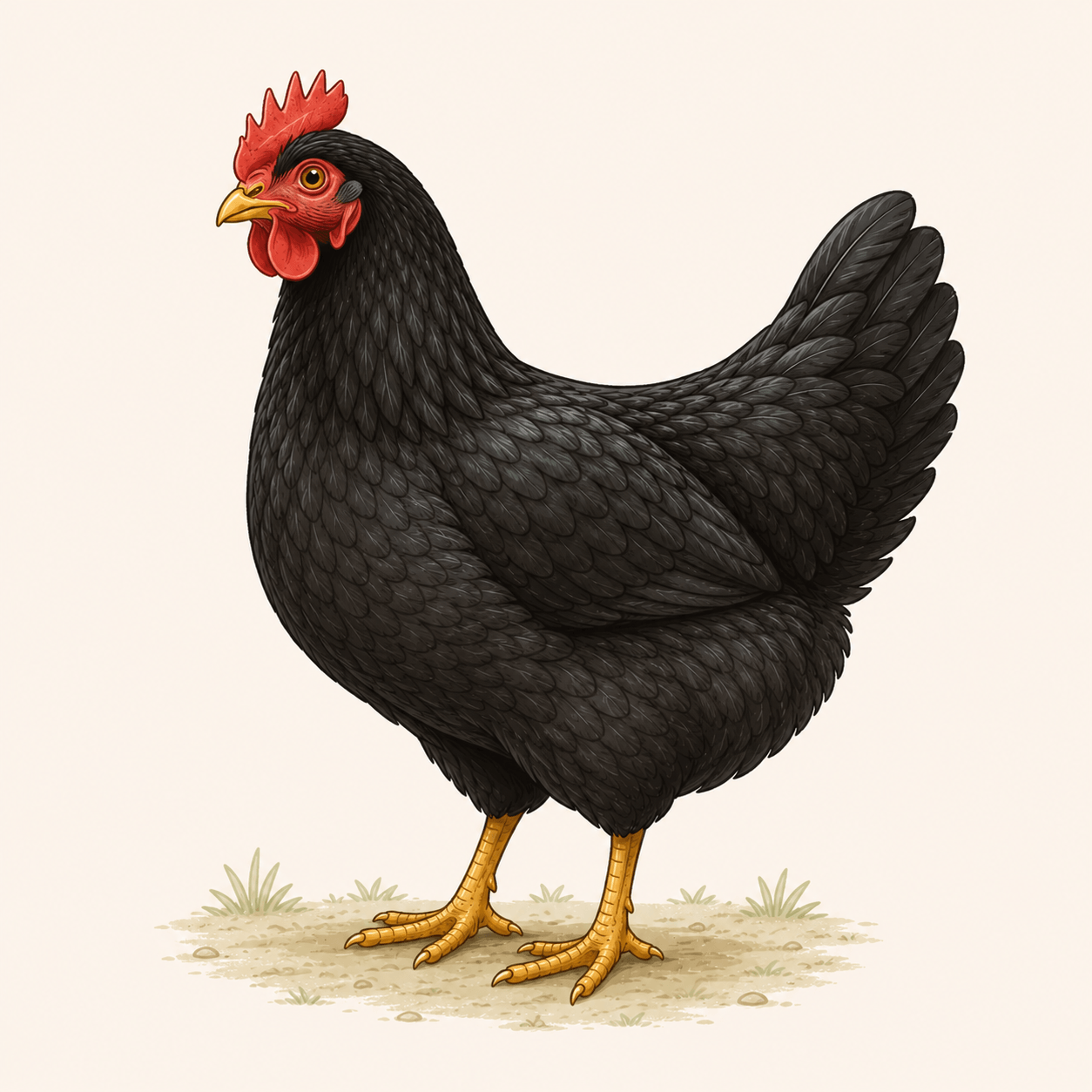
6 Australorp — Best Heritage Breed for Beginners
Brown
Large
Quiet & gentle
Good
18–22 weeks
Heritage backyard flocks
Most high-production breeds are hybrids with a 2–3 year productive peak. If you want a bird that lays well for 4–5 years, the Australorp is the best option for beginners. It holds the world record for egg laying (364 eggs in 365 days under test conditions) and comes closer to that record in backyard conditions than any other heritage breed.
Their beetle-green iridescent feathers are stunning in sunlight, their temperament is calm and easy to manage, and they integrate well into mixed flocks. For a beginner who wants to build a long-term flock rather than cycling birds every few years, Australorps are the smart choice.
✔ Why it’s great for beginners: Best laying heritage breed available. Long productive lifespan. Calm and easy to manage. Beautiful birds.
✘ One thing to know: Like Buff Orpingtons, Australorps can go broody. Starts laying a few weeks later than hybrids. Takes slightly longer to establish than sex-link breeds.
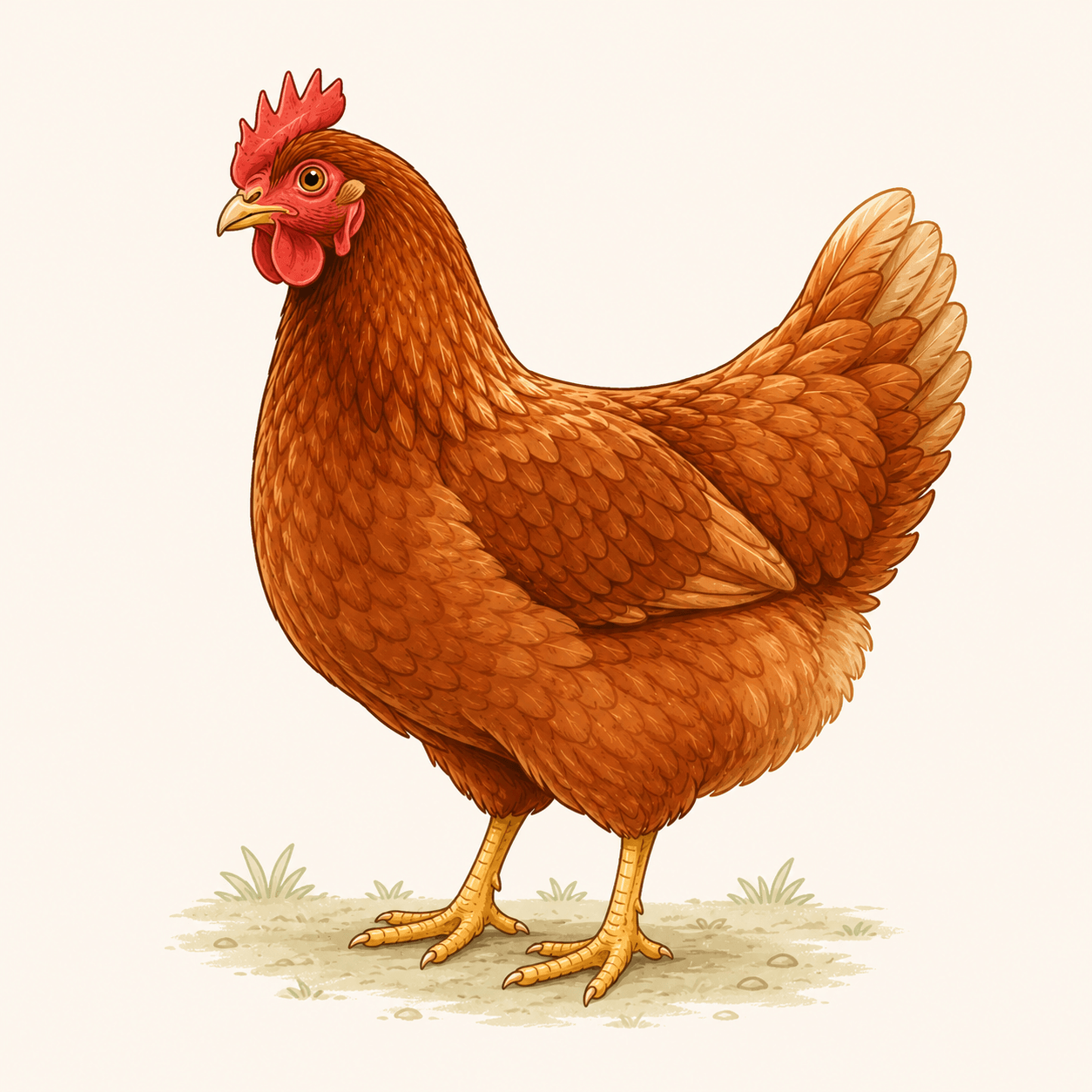
7 ISA Brown — Best for Beginners Who Want Maximum Eggs
Brown
Large
Docile & easy to manage
Moderate
16–18 weeks
Maximum egg output
The ISA Brown is the undisputed egg production champion — 300–350 eggs per year is a realistic average, not a hatchery marketing claim. If your primary goal is simply the most eggs from the fewest birds, this is your breed. It ranks 7th on this beginner list only because its cold tolerance is more limited than the others, and its productive lifespan (2–3 years) is shorter.
For beginners in Texas, Florida, California, or other mild-climate states, the ISA Brown’s limitations largely disappear. It’s the ideal breed when you want to maximize egg output without any fuss.
✔ Why it’s great for beginners: Highest egg count of any breed on this list. Docile and manageable. Starts laying very early at 16–18 weeks. Easy to find at any farm store.
✘ One thing to know: Not suitable for very cold climates without a well-insulated coop. Short productive peak of 2–3 years means more frequent flock replacement.
Which Breed Is Right for Your Situation?
If you have kids or want friendly birds → Golden Comet or Buff Orpington
Both seek out human interaction and tolerate handling from young children. Golden Comet if you also want high production; Buff Orpington if personality and cold hardiness matter more than egg count.
If you’re in a cold climate → Plymouth Rock or Rhode Island Red
Both maintain strong production through harsh winters. Plymouth Rock for extreme cold (Minnesota, Alaska, northern New England). Rhode Island Red for anyone who wants a tough, self-sufficient flock that can handle variable conditions.
If you want the most eggs possible → ISA Brown or Golden Comet
ISA Brown edges out Golden Comet on pure numbers (300–350 vs 250–300), but Golden Comet is friendlier. If you’re in a mild climate and egg output is the priority, ISA Brown. If temperament also matters, Golden Comet.
If you want a long-term flock (5+ years) → Australorp or Plymouth Rock
Heritage breeds outlast hybrids in productive lifespan. Australorp gives you the best egg count among heritage breeds; Plymouth Rock gives you the best cold hardiness. Both will still be laying respectably in year five when a Golden Comet has largely retired.
If you want low maintenance → Black Sex-Link or Plymouth Rock
Neither breed needs much from you. Both are hardy, consistent, and don’t demand attention. Black Sex-Link for slightly higher production; Plymouth Rock for extreme cold tolerance.
Beginner Setup Checklist: What You Need Before Your Chicks Arrive
The most common beginner mistake is ordering chicks before the coop is ready. Have everything set up and running at least one week before your birds arrive.
Everything You Need Before Your Chicks Arrive
Set up your brooder, coop, feed, and predator protection before bringing chicks home. This checklist covers the essentials every first-time chicken keeper needs.
Brooder box
A large cardboard box or plastic tote works for the first 6 weeks. Line with pine shavings (not cedar — the oils are toxic to chicks).
Heat lamp or brooder plate
Chicks need 95°F the first week, dropping 5°F per week until feathered (~6 weeks). A brooder plate is safer than a heat lamp (lower fire risk).
Chick starter feed (non-medicated)
18–20% protein. Feed this for the first 16–18 weeks before switching to layer feed.
Waterer
Shallow waterer with marbles in the tray for the first week so chicks can’t fall in and drown.
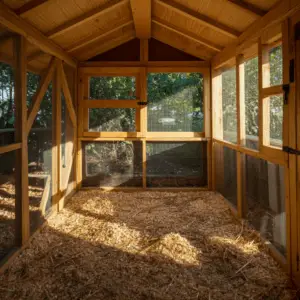
Coop with 4 sq ft per bird indoors
Minimum space per hen. More is always better.
Run with 10 sq ft per bird outdoors
Secure from predators (hardware cloth, not chicken wire — predators can tear through chicken wire).
Nesting boxes
1 box per 3–4 hens. Fill with straw or pine shavings. Hens will start using them around 18–20 weeks.
Roost bar
At least 8 inches of roost space per bird, positioned higher than the nesting boxes so hens roost rather than sleep in the boxes.
Layer feed (16–18% protein)
Switch to this when your pullets start laying, around 18–20 weeks. Add oyster shell free-choice for strong eggshells.
How many chickens should you start with? Most beginners do best with 3–4 hens. That gives you roughly 15–20 eggs per week — more than enough for a household — while keeping the flock manageable. Resist the urge to start with more until you know what you’re doing.
What to Expect in Your First Year
Here’s an honest timeline for a beginner who starts with day-old chicks from one of the breeds on this list:
- Weeks 1–6 (brooder phase): Chicks need heat, starter feed, and daily fresh water. Losses can happen — this is normal, especially in the first week. Most healthy chick orders have a 95%+ survival rate.
- Weeks 6–16 (pullet phase): Move birds to the coop around week 6–8 when fully feathered. Switch to grower feed. Birds will establish a pecking order — some squabbling is normal.
- Weeks 16–22 (point of lay): Hens from the breeds on this list typically start laying between 16–22 weeks. First eggs are small — this is normal and they’ll increase in size over the first month.
- Months 6–18 (peak production): Your best laying period. Expect 5–6 eggs per hen per week from Golden Comets, ISA Browns, and Black Sex-Links. 4–5 per week from heritage breeds.
- First winter: Production will drop 30–50% unless you add a coop light (14–16 hours total daily light keeps hens laying). Rhode Island Red and Plymouth Rock hold up best without supplemental light.
With 4 Golden Comets or ISA Browns, expect roughly 20–24 eggs per week at peak production — about 3 dozen per week. After the first winter and into year two, plan on 15–18 per week. Enough for a family and some to share with neighbors.
Beginner Chicken Questions Answered
Common questions first-time chicken keepers ask about egg production, flock size, breed selection, and backyard care.
What is the best egg laying chicken for beginners?
The Golden Comet is the best egg laying chicken for beginners overall. It lays 250–300 large brown eggs per year, has an extremely friendly temperament, and is forgiving of management mistakes. Rhode Island Red is the best choice for beginners in cold climates, and Buff Orpington is best for families with young children.
What chicken breed is easiest to raise?
Buff Orpington and Golden Comet are consistently rated the easiest chicken breeds to raise. Both are calm, tolerate handling well, adapt to confinement, and are forgiving when management isn’t perfect. Plymouth Rock and Black Sex-Link are the most low-maintenance if you prefer birds that are independent rather than affectionate.
How many eggs can a beginner expect from backyard chickens?
A beginner with 3–4 hens from a reliable laying breed can expect 15–20 eggs per week in the first year. Production drops in winter without supplemental lighting and declines about 20% each year as hens age. With 4 ISA Browns or Golden Comets at peak production, you can expect close to 24 eggs per week.
How many chickens should a beginner start with?
Most beginners do best starting with 3–4 hens. This gives you enough eggs for a household (roughly 15–20 per week), keeps the flock manageable, and means one sick or underperforming bird doesn’t cripple your production. Starting with more than 6 birds is generally not recommended for first-time keepers.
Do beginner chickens need a rooster?
No. Hens lay eggs perfectly well without a rooster. You only need a rooster if you want fertilized eggs and to hatch chicks. Roosters are also banned in many suburban areas, can be aggressive, and add management complexity. For a beginner backyard flock, skip the rooster entirely.
What is the most low-maintenance chicken breed?
Plymouth Rock (Barred Rock) and Black Sex-Link are among the most low-maintenance chicken breeds. Both are hardy, disease-resistant, lay consistently without much intervention, and handle a wide range of climates without special care. Rhode Island Red is a close third for pure hardiness.
When do beginner chickens start laying eggs?
The breeds on this list start laying between 16 and 24 weeks of age. Golden Comet and ISA Brown are the earliest at 16–18 weeks. Buff Orpington and Australorp are the latest at 20–24 weeks. The first eggs will be small — this is normal and size increases over the first month of laying.
Can beginners mix different chicken breeds?
Yes, and most experienced keepers recommend it. A mixed flock of 2 Golden Comets, 1 Plymouth Rock, and 1 Buff Orpington, for example, gives you production, cold hardiness, and friendly personalities in one group. The key is to avoid mixing very assertive breeds (like Rhode Island Red roosters) with very gentle breeds (like Silkies) in the same flock.